Kennel Club Automation · Use Case

From pedigree office work to AI-assisted registration.

An Israeli Kennel Club use-case demonstration: structured rules, clear blockers and an AI Office Agent that prepares the next step while keeping authorized staff in control.
Rules-first AI — not a generic chatbotAuthorized decisions stay with your teamBackground monitoring keeps cases in view
Dogg Donna Office Agent reviewing a synthetic litter-registration case
Product demonstration · Synthetic case data
The Challenge

Pedigree registration is not data entry. It is operational decision-making.

Every litter can involve breeding regulations, breed-specific health requirements, FCI pedigree rules, ownership checks, Appendix Book logic, approvals, documents, exceptions and final pedigree issuance. Historically, experienced staff carry much of this logic in their heads.

Complex regulations

Different rules can apply depending on breed, dog status, pedigree depth, health results and the organization’s policies.

Institutional knowledge

The office depends on experienced employees knowing what to check, who should approve, and what must happen next.

Manual follow-up

Cases stop while employees request documents, wait for replies, reopen applications and reconstruct what is still missing.

Before

Every case passes through the office.

The traditional model requires employees to continuously inspect, interpret, follow up and re-check.

Traditional manual pedigree office
Litter submitted
Employee opens caseManual review begins
Case complete?
No — something is missing
Find blockerHealth result, document, approval, pedigree issue
Contact breeder / club / vet
Case waits
Employee reopens the case
Yes — case can progress
Route required approvals
Register litter
Create puppies & issue pedigrees
The expensive loop: every missing item sends the case back to an employee.
The Foundation

We made kennel club regulations executable.

The breakthrough is not simply “adding AI.” Dogg first converts rules, regulations and office procedures into a structured model that software can consistently reason over.

From regulation to controlled case progression
Written rulesFCI, breeding, health, office procedures
Structured rule modelMachine-readable requirements & states
Decision engine
AI Office Agent
What should happen next?
Within approved permissions
Execute an approved action
Re-evaluate case
Input missing
Prepare an evidence request
Resume when event arrives
Judgment required
Escalate decision-ready case
Resume after human decision
Ready to complete
Register litter
Create puppies
Generate pedigrees

Breeding & eligibility

Age, mating conditions, breed-specific rules, permissions, restrictions and breeding status.

Health & pedigree

Required examinations, results, recognized FCI generations, imports, missing ancestry and Appendix Book rules.

Office operations

Documents, payments, approvals, responsibilities, exceptions, communication and final issuance.
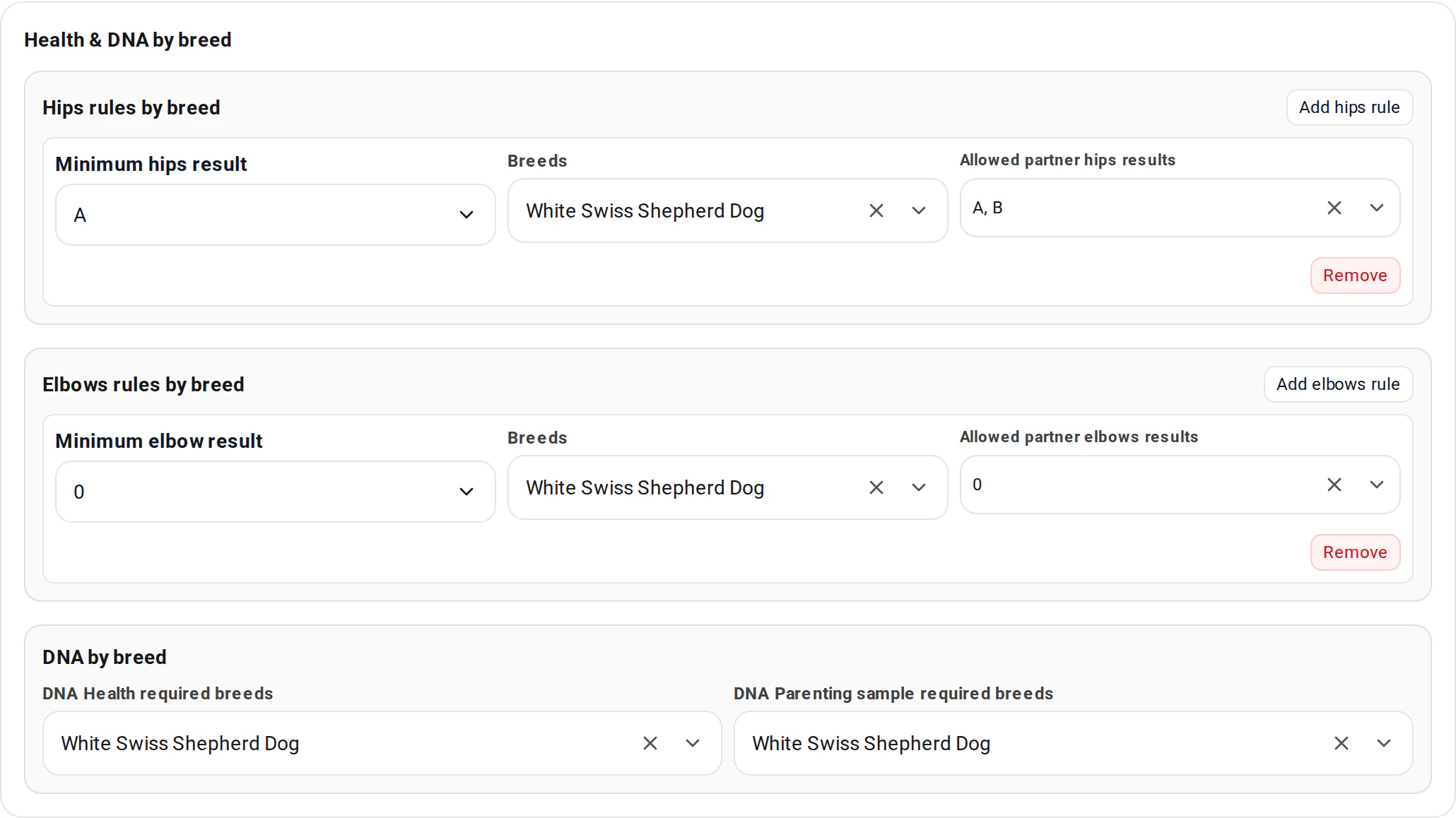
Structured breeding and health rules
Structured breeding and health rules. Existing Dogg organization settings showing breed-specific HD, ED and DNA requirements.
The AI Office Agent

A digital case worker that keeps the next step clear.

For each case, Donna evaluates the current state, identifies blockers and prepares the next permitted action. Background checks detect relevant changes; messages and office decisions retain their required authorization.

How the Office Agent manages one litter-registration case
New litter registration
Build case contextDogs, owners, pedigree, health, organization rules
Evaluate applicable rules
Blocking issue?
Yes — blocker exists
Can agent resolve?
Send an approved request / create an allowed task
Wait for event
Automatically re-run affected rules
No — standard path
Human approval required?
If yes: prepare a decision summary
Authorized human decides
Agent resumes from same point
Case ready
Authorize registration
Create puppies
Generate pedigrees
Case closed
Example Case

One missing health result

Dam eligibilityEligible
Sire eligibilityEligible
OwnershipValid
FCI generationsValid
Elbow dysplasia resultMissing
What the agent does

No employee needs to rediscover the problem.

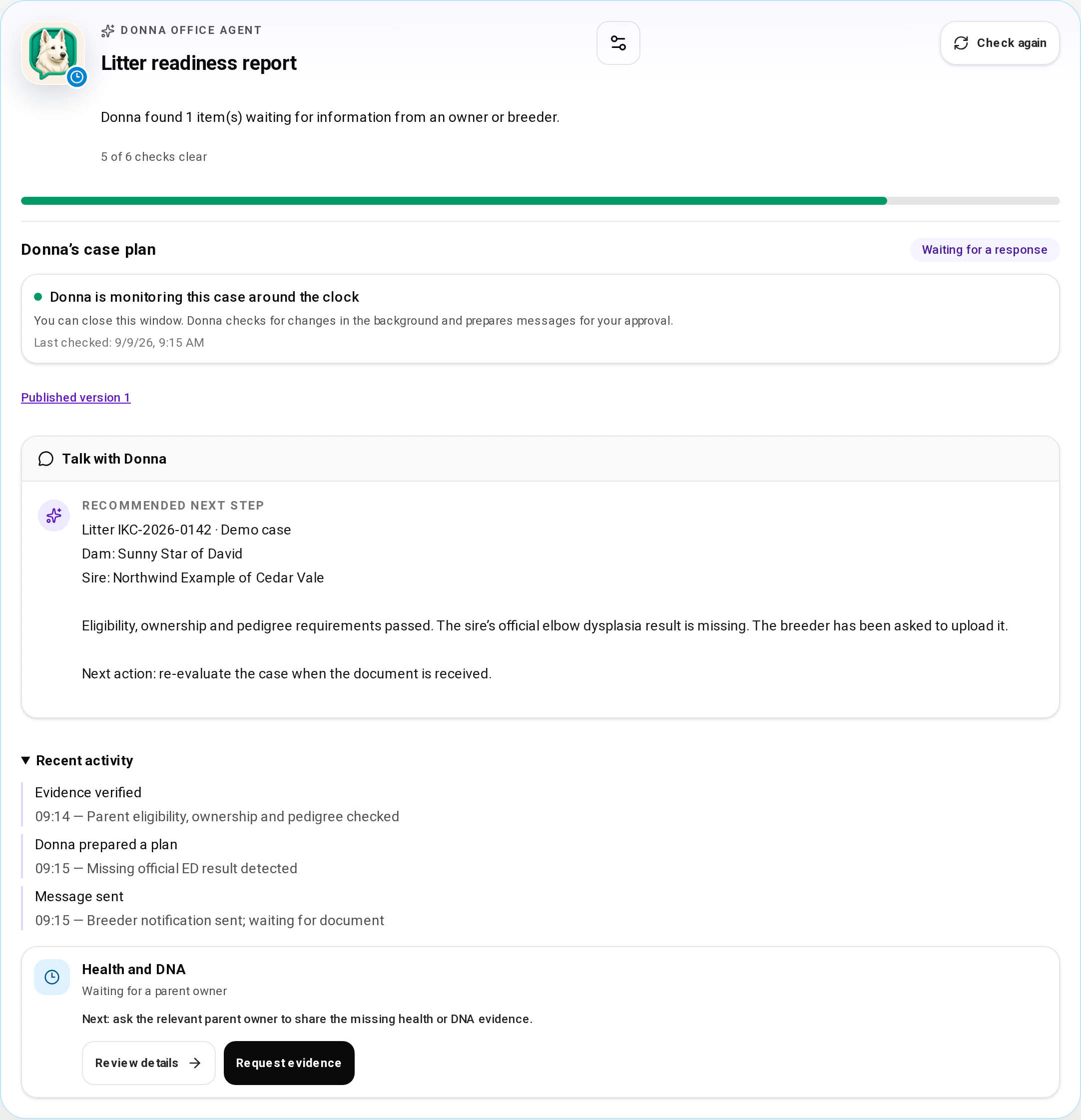
Donna identifies the blocked step and prepares a precise evidence request. After the authorized message is sent, background monitoring can detect the update and re-evaluate the case without an employee having to reconstruct its history.
Office employee intervention:
Required for configured approvals, outgoing messages and decisions that need professional judgment.
Donna Office Agent case
Donna Office Agent case. A synthetic litter-readiness case showing the blocker, next action and recent agent activity.
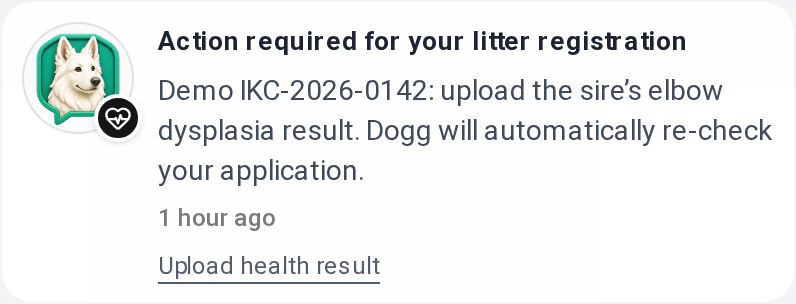
Breeder notification
Breeder notification. The in-product notification tells the breeder exactly what evidence is missing and what to do next.
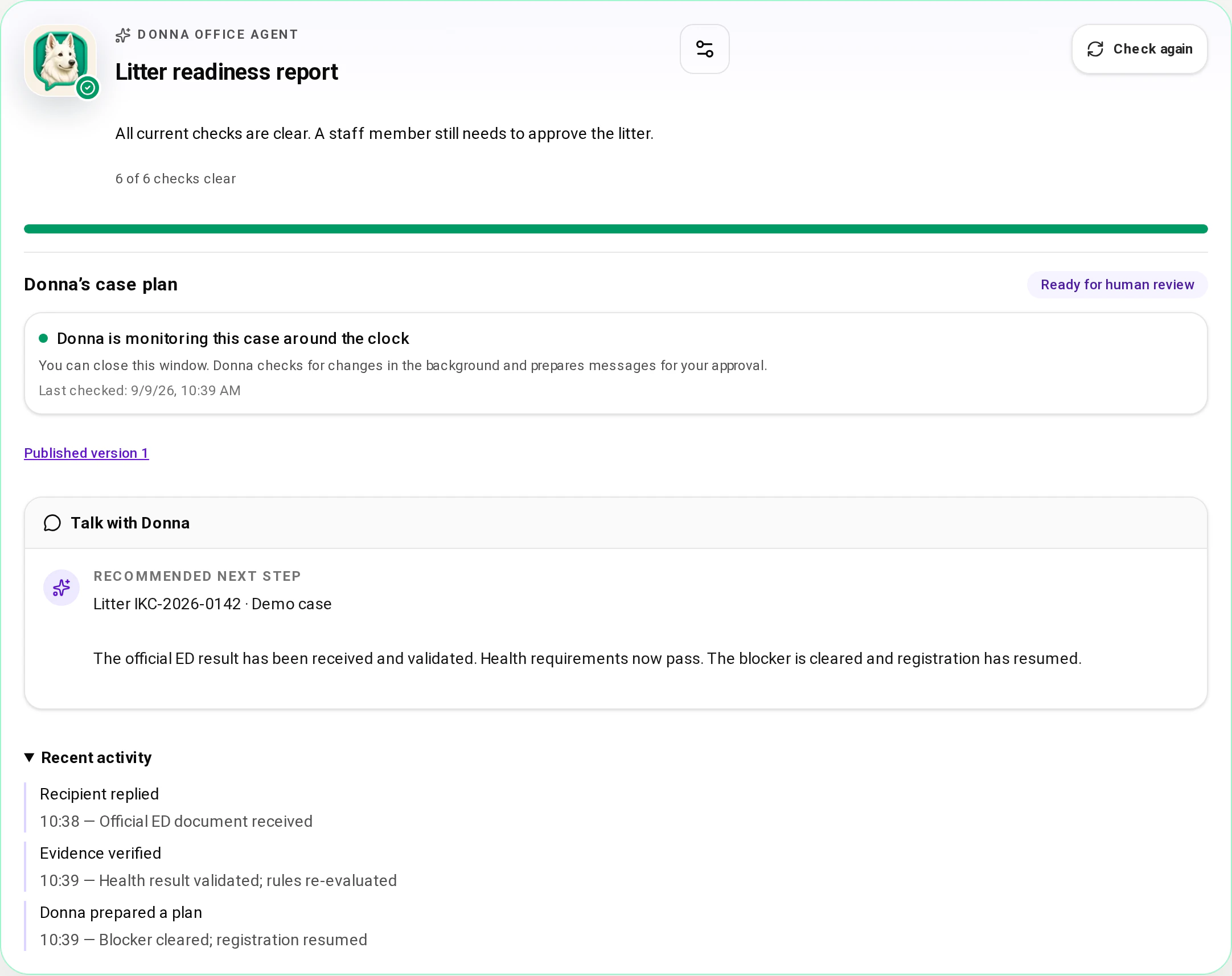
Donna Office Agent automatically re-evaluating a litter registration
Automatic re-evaluation. This synthetic example shows evidence received and re-evaluated, with the case ready for the next authorized human review.
Human in the loop

Office teams focus on the decisions that need them.

The goal is not to let AI invent kennel club policy. The organization owns the rules. The Office Agent applies them, automates the repetitive work, and escalates cases that genuinely require professional judgment.
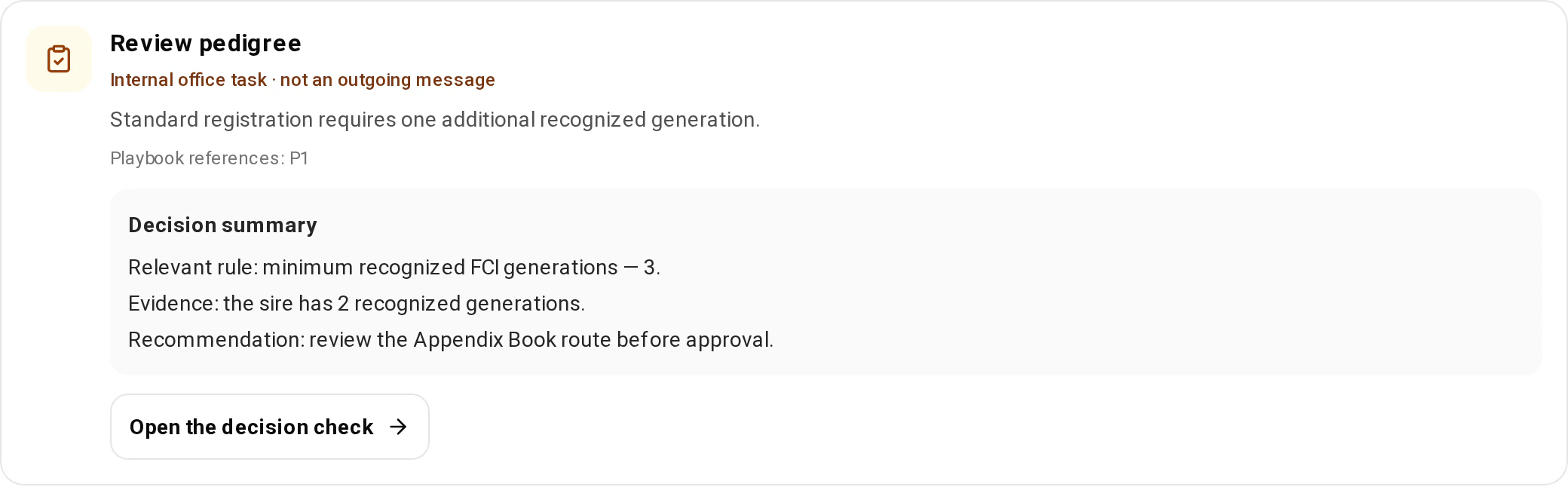
Authorized decisions by design
Agent evaluates case
Existing rules enough?
Yes
Agent evaluates & prepares actions
Case progresses within approved permissions
No
Prepare contextRule reference, blocker, evidence, recommendation
Authorized human decision
Decision stored
Agent resumes automatically
Decision-ready human exception
Decision-ready human exception. Donna summarizes the relevant rule, evidence and recommended route before a human decision.
The End State

A clear path from submission to completed registration.

Once all required rules, evidence and approvals are satisfied, the litter can reach its completed registration state and the puppies are created in the breeding book.
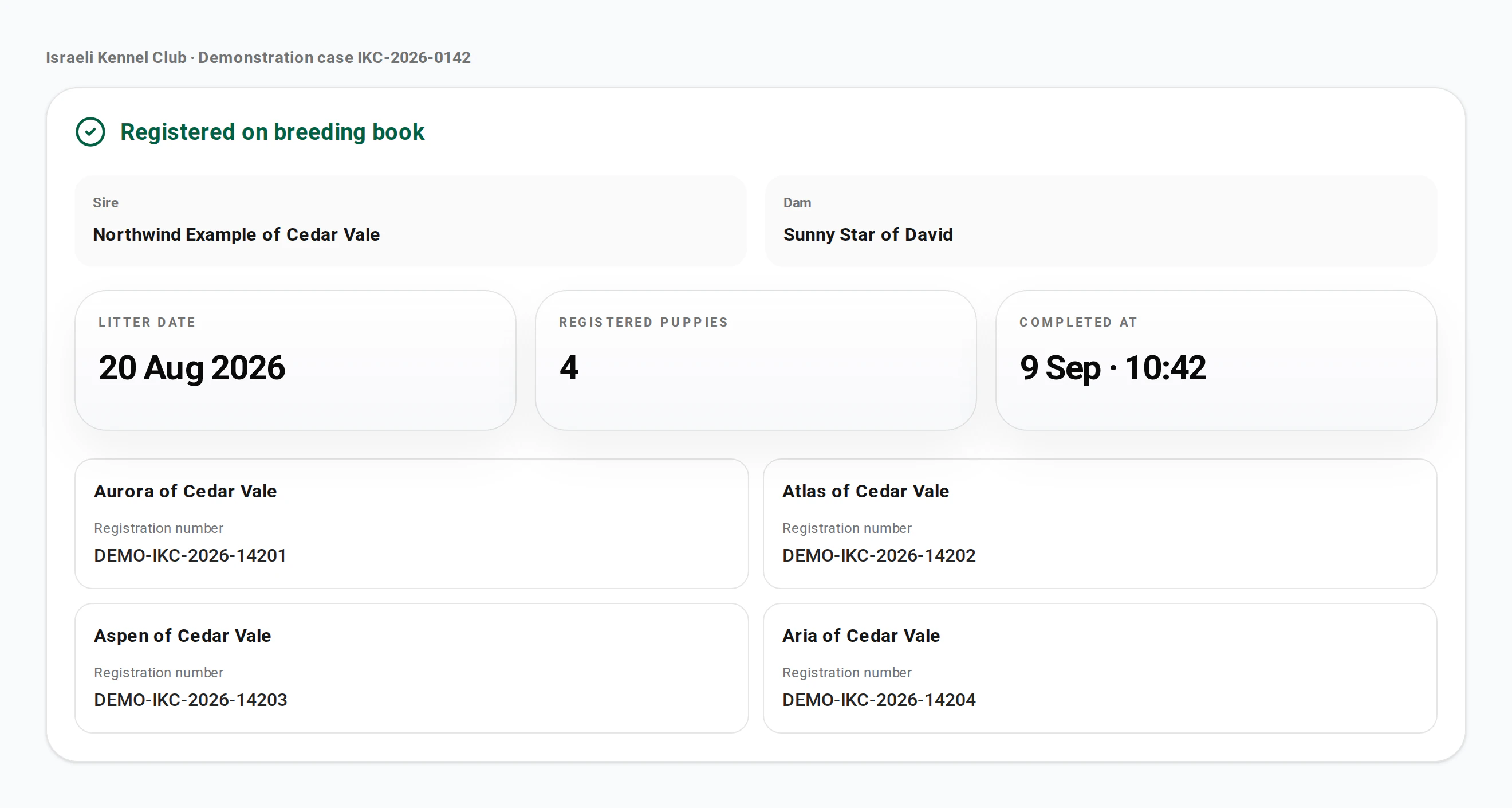
Completed litter registration in Dogg
Completed registration. A synthetic completed breeding-book case showing four puppies, assigned registration numbers and completion time.
Continuous improvement

Every exception can make the system better.

When a valid scenario reaches a human because the system cannot yet resolve it, the organization can formalize the rule or workflow. Over time, more cases become structured and the percentage requiring employee intervention can continue to fall.

Continuous improvement loop
1
Agent encounters an unknown scenario
2
A human resolves the case
3
The team reviews why automation stopped
4
The rule or workflow is added or refined
5
The updated logic is validated against historical cases
6
Improved logic is deployed so future similar cases move automatically
Each resolved exception can become a new automated capability.
The Operating Model Changes

From manual follow-up to monitored case progression.

The operating-model shift

Before — employee moves the case

1
Application arrives
2
Employee manually checks case
3
Employee discovers blocker
4
Employee contacts breeder / club / vet
5
Case sits waiting
6
Employee must remember and reopen it

After — Office Agent supports case progression

1
Application arrives
2
Agent automatically evaluates rules
3
Agent identifies exact blocker
4
Agent takes the allowed next action
5
System waits for the required event
6
Background monitoring detects changes and rechecks
Operational impact

Measure less handling time, clearer exceptions and more capacity.

The strongest measure of this transformation is the human intervention rate: what percentage of pedigree and litter-registration cases actually need office staff involvement?
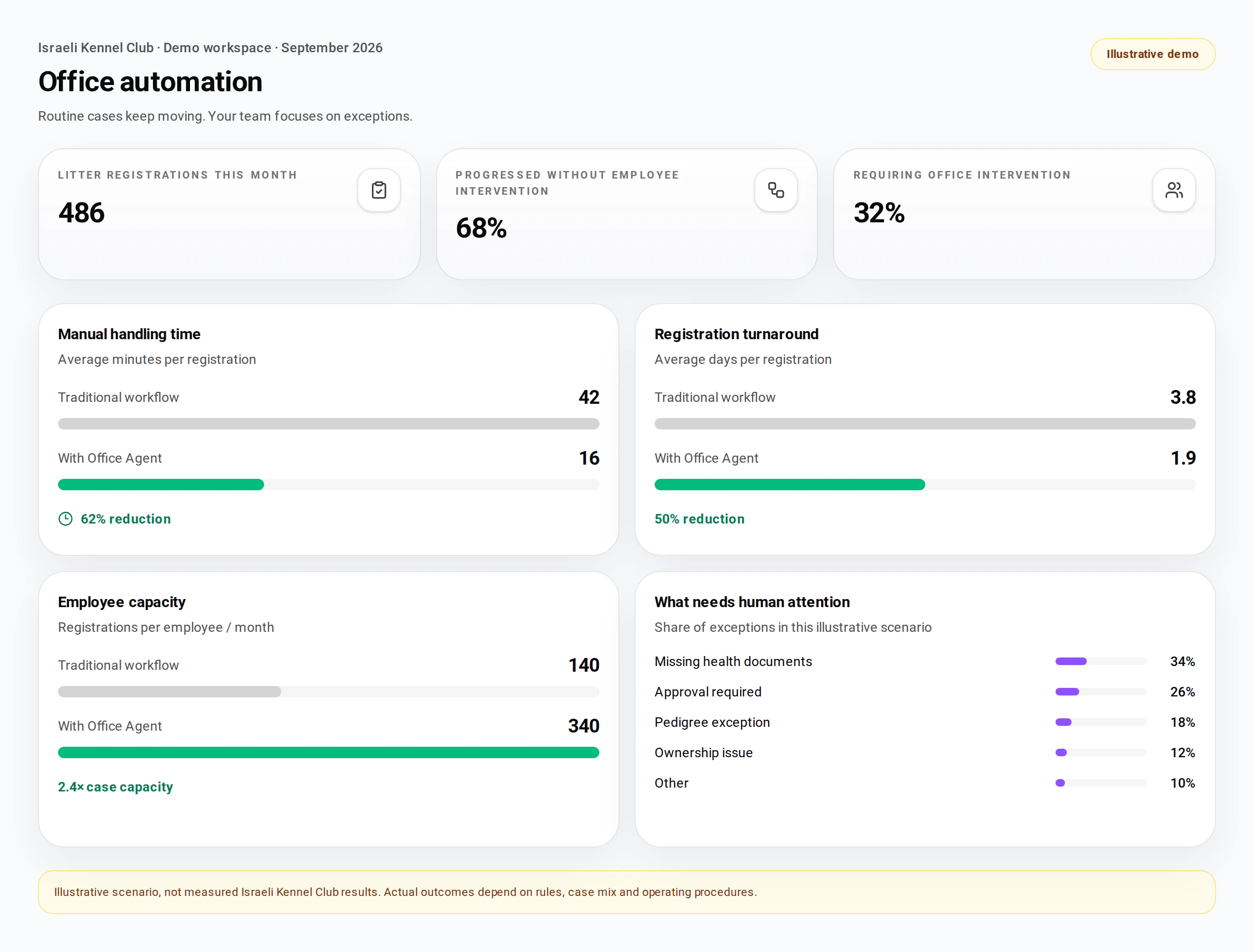
60–75%Target share of routine cases progressing without employee intervention
50–70%Potential reduction in manual office handling time per standard litter
2–3×Potential increase in registrations managed per office employee
40–60%Potential reduction in average turnaround time for complete standard cases
Illustrative working assumptions.
These are illustrative planning targets, not measured Israeli Kennel Club results or guaranteed outcomes. Results depend on case mix, configured approvals and operating procedures. Establish a baseline and measure the impact during your pilot.
Office automation dashboard
Office automation dashboard. Illustrative metrics showing intervention rate, handling time, turnaround time and employee capacity.
For kennel clubs & canine organizations

Turn your regulations into structured workflows. Give your team more time for the decisions that matter.

Dogg combines pedigree data, breeding rules, organization workflows and AI-powered case management so kennel clubs can scale without scaling administrative workload at the same rate.

Talk to Dogg